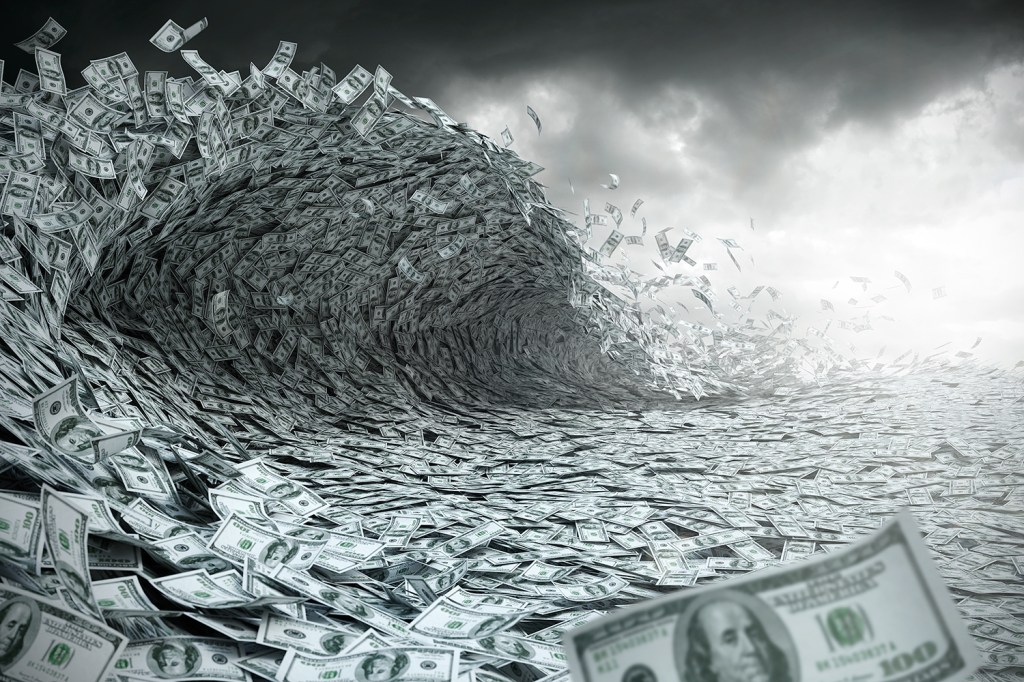
The Bloomberg Billionaires Index, listing the world’s richest individuals, is astonishing for the sheer wealth held by single individuals. As of September 1, 2024, Elon Musk has a net worth of approximately $239 billion (+$10 billion in 2024), followed by Jeff Bezos at $202 billion (+$24.9 billion this year), Bernard Arnault at $197 billion, and Mark Zuckerberg at “only” $185 billion. Those in the top 15 positions each hold over $100 billion, showcasing an extraordinary concentration of wealth. We now have individuals with wealth equivalent to, or even surpassing, that of many medium-sized countries.
Macroeconomic data indicates that, at the end of the first quarter-century of the new millennium, there is a significant issue of wealth concentration on the planet. Early 21st-century globalization has created a scenario where the rich grow richer, and the poor grow poorer, in an unprecedented spiral of wealth accumulation. The same Bloomberg ranking shows that in 2024, all the fortunes of the world’s billionaires have grown by 5% to 20%, with significant increases in absolute value.
Wealth concentration is not unique to contemporary times: in the past, there was also significant accumulation of wealth, land, and assets. Consider the Middle Ages, when nobles and the aristocracy possessed vast wealth that enabled the construction of monumental art, thanks to a small group of people controlling immense wealth. The subjects changed in subsequent centuries, but the wealth of a narrow oligarchy did not: the emerging bourgeoisie was no different in terms of wealth held by individuals or families.
However, as Guido Alfani, professor of Economic History at Bocconi University, reminds us in an interview with Avvenire, “for centuries, it was considered normal and entirely acceptable for nobles to have greater resources because they also had greater duties toward their subjects. In the feudal system, inequality was very broad, but it was conceptualized within an ordered system of reciprocity.” In the medieval and later modern worlds, possessing significant wealth created a kind of “debt” that the rich felt toward the community. The scholar recalls how the wealthy were considered a sort of “money granaries” to be tapped in times of emergency or famine. In the end, such wealth implied significant social and community responsibility.
Things changed radically at the beginning of the third millennium when “we concretely saw the inversion, the shift from a situation where public debt risk is privatized because it is guaranteed by the very rich, to one where the private risks of billionaires are collectivized, as happens when public money is used for the state rescue of institutions ‘too big to fail’.” The issue today, therefore, is not just the amount of wealth concentrated in the hands of a few, but more fundamentally, the role and perceived responsibility of the rich towards the common good. The alarming fact is not only the immense wealth in the hands of a few but that these few have individualized wealth, no longer considered an original debt to all, but a privilege to be enjoyed without limits. This undermines the value of the universal destination of goods, so dear to the social doctrine of the Church: goods are for all and destined for all, to the point that this destination even precedes the right to private property. The earth’s goods were given to humanity so that, as one family, it could raise and prosper its children. The absolutization of possession and its detachment from any perspective of sharing and justice makes the world a restless and dangerous place. This is what some movements, like the Patriotic Millionaires, denounce: groups of millionaires who demand to pay more taxes, aware that, as they write in their manifesto, “the alternative is taxes or pitchforks.” Taxes are the central theme of this discussion: either the state returns to being a virtuous factor of wealth redistribution and resource sharing, or we will face times, both nationally and internationally, where social tensions will become increasingly insistent and pervasive. To be clear: no nostalgia for pauperistic or communist visions, just the awareness that social peace necessarily passes through fair access to the earth’s goods and resources.






Lascia un commento